The Context
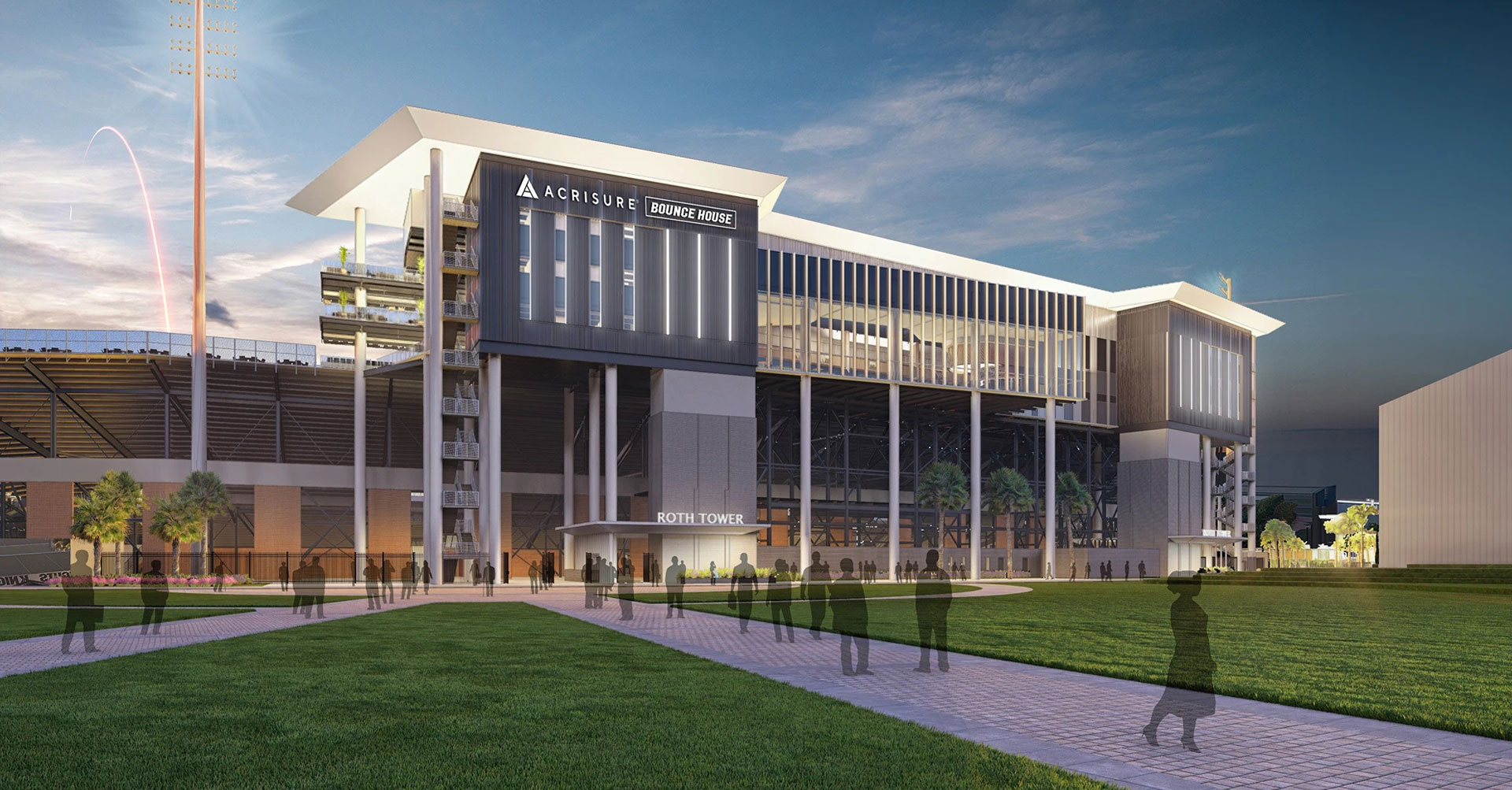
Barton Malow is a leading general contractor with $4.5B in annual revenue, serving multiple markets across North America. On a mission to transform the construction industry through innovation, Barton Malow runs an Innovation Pipeline program that surfaces and evaluates emerging technologies before committing them to live projects. ConstructivIQ entered that pipeline through team members frustrated with fragmented procurement workflows, and after evaluation it was selected for piloting on a major football stadium expansion project for the University of Central Florida.
The project required building new sections on both sides of the existing venue, which remained fully operational throughout the football season, followed by demolition of the original structure and a western expansion that tied everything together. Managing procurement planning and material tracking across multiple concurrent phases, with 25 to 35 active subcontractors and a wide range of fabrication scenarios, made standard approaches ineffective. The team needed a platform that could connect submittals, schedules, and material status in a single source of truth, and adapt in real time as project conditions evolved.
The project team embraced the deployment as an opportunity to build a true working partnership with ConstructivIQ from day one. Riley Arnold, a Project Engineer on the project, took the lead on procurement planning and material tracking. Without prior exposure to spreadsheet-based tracking, Arnold had a clear-eyed view of what the platform made possible.
The Solution
From the start, the team used ConstructivIQ as a single hub for procurement planning and material tracking. Pulling in the submittal log from Autodesk Forma (formerly Autodesk Construction Cloud) and the project schedule from P6, the platform kept procurement aligned as the project evolved. As timelines progress, the impact is immediately clear, with no manual rebuilding required. Arnold was managing roughly 15 subcontractors through the platform, updating lead times and adjusting for fabrication changes directly in the system rather than reconciling across multiple spreadsheet exports.
The project also pushed the platform’s boundaries early on. The team’s feedback drove product evolution across many areas. Two features now part of the core ConstructivIQ platform originated with this project.
The first was the field measurement workflow. On a phased project where many materials cannot be fabricated until precise site measurements are taken, teams had no way to represent that dependency in the system. Take wall panels as an example: fabrication cannot begin until the framing is complete and field measurements are taken, creating a gap between submittal approval and material release that had no formal place in the procurement sequence. Using an innovative combination of its ability to customize material workflows and define dependencies between construction activities and material release, ConstructivIQ built explicit support for tracking materials requiring field measurement. This gave the entire team visibility into why these materials had not moved forward and when they were expected to.
The second was the custom material status report. The team needed a formatted procurement summary to share with owners and internal stakeholders, one that previously required manually exporting raw data and reformatting it in Excel. ConstructivIQ built a structured report that gave teams control over how procurement data was presented, whether for a weekly team meeting or a formal owner update, removing the manual formatting step entirely.
Both features reflect a broader pattern. ConstructivIQ’s approach is to adapt to how construction teams actually work rather than requiring teams to adapt to the software.
“As new features rolled out, I could see our input reflected in the product. ConstructivIQ took our feedback and implemented new features based on it. It’s great to see how the platform has evolved over the past year.”
– Riley Arnold, Project Engineer
The Results
With procurement planning and material tracking consolidated in one place, the stadium team had the visibility to stay ahead of schedule risk from day one. When ConstructivIQ flagged that a material needed to be released within a specific window, Arnold could immediately cross-reference submittal status, confirm fabrication timelines with the subcontractor, and act before a potential delay reached the schedule. That kind of early warning, knowing which materials needed attention and when, meant the team was managing risk rather than reacting to it.
“With everything connected in one place, I can see what needs attention before it becomes a problem. By the time something is flagged as at risk, I still have time to act on it.”
– Riley Arnold, Project Engineer
“This project proved the value of having procurement, material tracking, and schedule visibility connected in one place. For our team, it created clarity and confidence in day-to-day decisions. For the owner, it meant better transparency and fewer surprises. And for the project overall, it helped us stay proactive, manage risk earlier, and deliver a stronger outcome in a very complex environment.”
– Zach Beiler, Project Manager
Looking Ahead
“With this new contract, leadership is investing in this more broadly. The goal is to onboard twice as many projects next year.”
– Marcy Jerore, Senior Technology Implementation Engineer
About Barton Malow
Barton Malow is a 100% employee-owned general contractor on a mission to transform the construction industry through innovation and increased efficiencies in the building process. The company serves a wide range of markets across North America, including automotive, energy, industrial, healthcare, commercial, K12, higher education, mission critical, sports, and entertainment.
© ConstructivIQ Inc. This case study is provided for informational purposes only and is confidential. It may not be reproduced, distributed, or disclosed without prior written consent.
Cover Image Credits: Barton Malow / AECOM